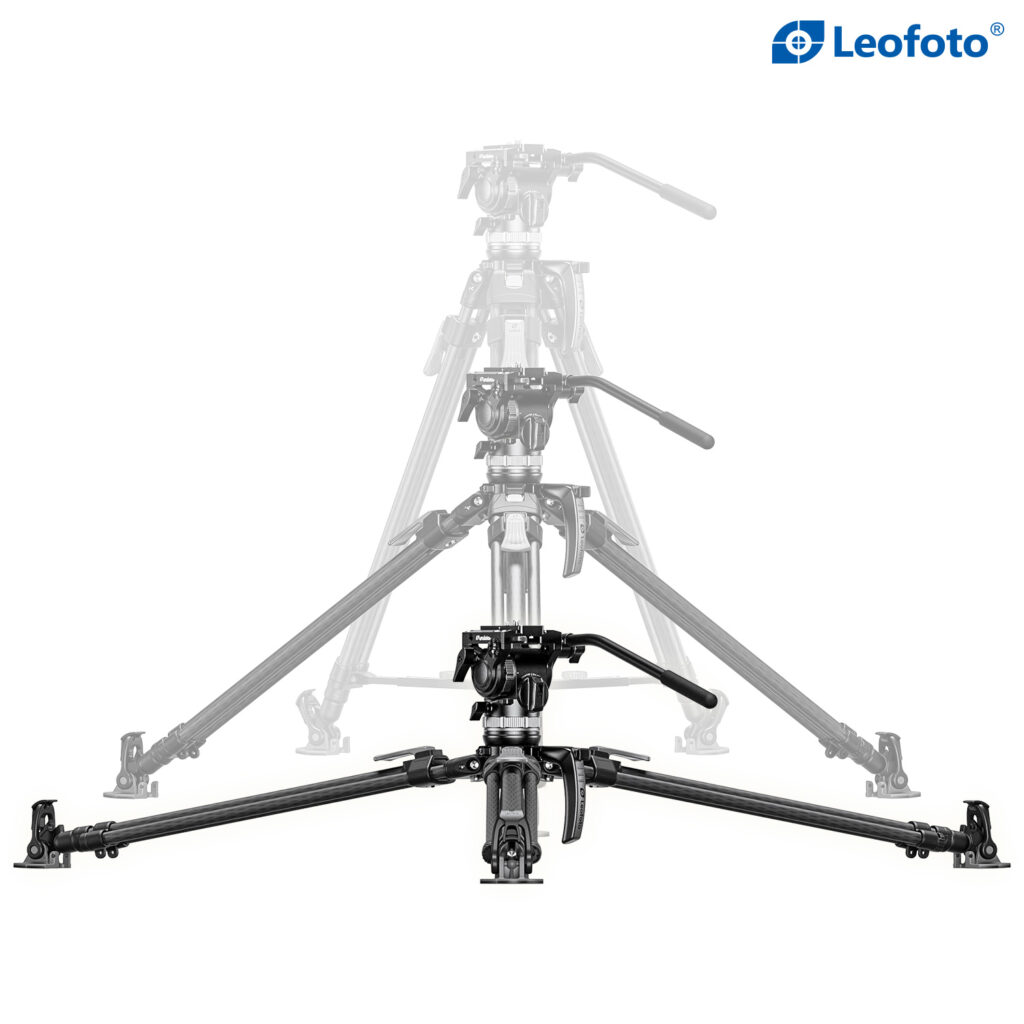
Fluid pan maneuvers subject camera supports to continuous lateral twisting forces. Cinema cameras outfitted with matte boxes, monitors, and heavy broadcast lenses transfer substantial momentum across the mounting head down into the leg joints. Any mechanical flex within the leg assembly creates backlash that ruins smooth panning shots.
Evaluating a videography tripod requires examining how structural leg geometry counteracts rotational movement. Camera operators frequently debate whether a streamlined single-tube build or a reinforced twin-leg system better suits their production demands. Both architectures deliver distinct functional trade-offs between rigidity, deployment velocity, and overall transport volume.
Deploying a professional video tripod on set means balancing operational stability against the physical realities of mobile shooting. Structural stability directly determines whether long focal length framing remains rock-solid during active camera operation. Examining the foundational differences between single-tube and dual-tube assemblies reveals how each design manages mechanical stresses.
Torsional Rigidity and Apex Connection Geometry
Single-tube legs utilize individual cylindrical segments extending downward from a singular hinge point at the top spider. While this arrangement yields a slim profile for carrying, single tubes offer lower resistance against rotational torque when panning heavy payloads. The narrow interface point concentrates physical strain directly onto isolated leg joints.
Twin-leg configurations incorporate paired carbon-fiber tubes running parallel along upper leg sections. In systems manufactured by Leofoto, dual leg tubes connect to the main spider through two separate connection points rather than one. This dual-joint architecture distributes mechanical stress across a broader footprint, markedly raising resistance against rotational flexing.
Torsional resistance proves critical during high-drag pan and tilt movements on fluid heads. Multi-tube legs counteract horizontal deflection, preventing the spring-back effect that often plagues single-column legs when an operator stops a rapid pan. Four individual carbon-fiber tubes per leg provide the structural framework needed to steady rigorous video captures.
Height Adjustment Mechanisms and Deployment Speed
Height adjustments on traditional supports involve manipulating multiple independent twist locks or thumb levers along every leg stage. Operators must stoop down to loosen bottom leg collars, raise the center, and retighten each joint individually. Such repetitive handling slows down camera repositioning during fast-paced live events and dynamic documentary shoots.
Modern twin-leg systems frequently implement synchronized one-button unlocking mechanisms positioned near the upper apex. Pressing a single release unlocks both leg stages simultaneously, allowing rapid height adjustments without bending down to reach lower stages. Dual adjustment modes provide camera operators with flexible control over operational heights spanning from 350 mm to 1620 mm.
Speed of deployment separates high-efficiency setups from cumbersome field gear. A single-tube videography tripod often requires twisting three separate lock rings per leg, totaling nine manual adjustments for a standard three-section support. Concentrating locking controls into an accessible upper mechanism dramatically accelerates elevation changes on set.
Integrated Half-Bowl Architecture and Leveling Efficiency
Leveling an uneven camera platform presents an ongoing obstacle on sloping terrain or irregular studio floors. Photography tripods typically rely on flat mounting plates that force operators to adjust individual leg lengths to level the camera. A specialized professional video tripod utilizes a spherical half-bowl base that enables immediate multi-directional horizon alignment.
Traditional video platforms require screwing a separate half-bowl adapter bowl directly onto an open tripod spider before attaching the fluid head. Structural engineers at Leofoto integrate the 75 mm half bowl directly into the spider casting itself. Direct integration cuts down component stack height, sheds excess hardware weight, and removes mechanical play between separate adapters.
Fluid video heads seated inside an integrated 75 mm bowl adjust smoothly without disturbing leg positions. Releasing the bottom bowl grip permits quick tilt corrections within an ergonomic range of positive 90 degrees to negative 60 degrees. Quick horizontal alignment keeps camera sensors level, preventing tilted horizons during wide panning sequences.
Angle Articulation and Surface Grounding Dynamics
Independent leg angle selectors provide vital stability across staircases, curbs, and steep embankments. Multi-position angle switches allow each leg to lock independently into three preset angles without requiring rigid center spreaders. Removing rigid mid-level spreaders enables the support frame to splay flat, bringing camera packages down to a low 350 mm minimum height.
Surface contact dynamics dictate how effectively an anchored base absorbs vibrations. Equipping a videography tripod with hoof-shaped rubber feet provides expansive ground traction on polished concrete, studio floors, and paved surfaces. Replacing rubber pads with stainless steel spikes allows the legs to bite securely into damp turf, gravel, and loose outdoor dirt.
Anti-twist handle attachments further stabilize panning control during intense tracking shots. Purpose-built handles crafted with four location pins seat firmly into receiver sockets on both horizontal and vertical axes. Secure handle mounting prevents rotational slipping when dragging heavy camera rigs across a 360-degree panning arc.
Production Demands and Structural Selection Criteria
Selecting between single-tube and twin-leg supports depends heavily on the specific nature of scheduled productions. Solo documentary shooters trekking over long distances may prioritize the narrower collapsed footprint of single-tube designs. Conversely, high-end video captures and commercial setups demand the torsional stiffness, 20kg stated payload support, and rapid leveling of twin-tube carbon-fiber systems.
Engineering advancements in carbon-fiber manufacturing deliver twin-leg stability without excessive transport bulk. High-strength carbon composites keep total system weight near 4.46kg while collapsing down to an 860 mm transport length. Production gear built by Leofoto demonstrates that twin-tube stability and compact portability can coexist within modern video workflows.
Investing in a dedicated professional video tripod establishes a reliable physical foundation for fluid cinematic motion. Twin-tube geometry with dual apex junctions resists torsional flex, while single-button release mechanisms streamline on-set adjustments. Matching physical leg architecture to production workflows delivers steady framing, smooth camera moves, and efficient operation across demanding shooting environments.