Dash cams have evolved from simple video recorders into connected vehicle-security tools. As drivers expect clearer evidence, broader coverage, and easier access to footage, manufacturers are combining high-resolution imaging with connectivity, intelligent processing, and parking monitoring.
From Clear Footage to Smarter Recording
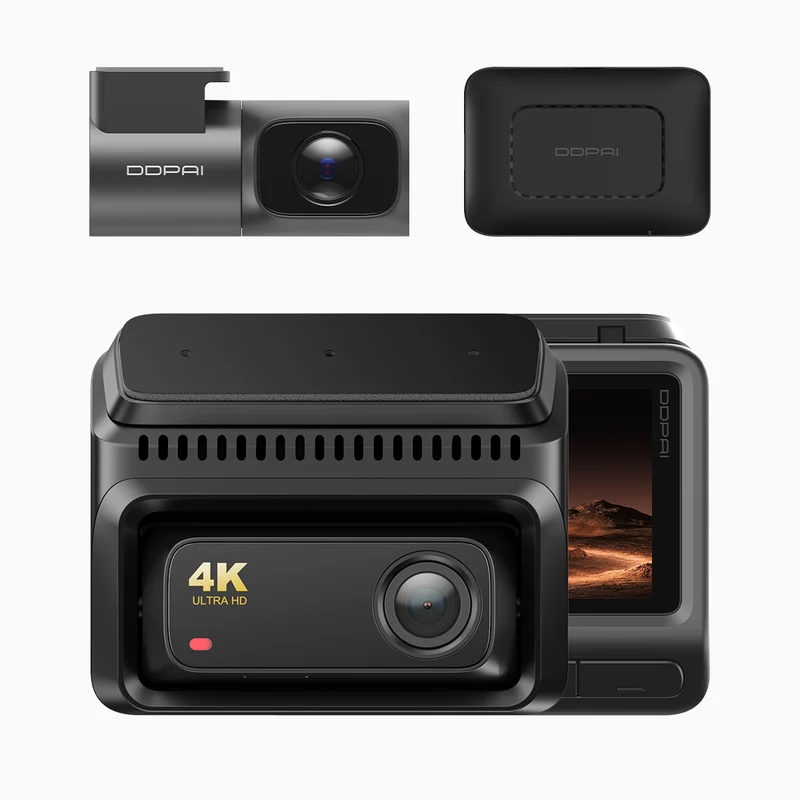
4K recording has raised expectations for image quality. The DDPAI Z60, available through DDPAI Philippines, records front footage at 3840 × 2160 and rear footage at 1920 × 1080. Its front camera uses an F1.8 aperture and a 140° viewing angle, while the rear camera uses F2.0 and 125°. These specifications provide a wider visual perspective while preserving useful detail for reviewing road events.
However, resolution is only one part of modern dash-cam performance. Drivers increasingly need footage from more than one direction. The Z60 supports 4K front and 1080P rear recording, and can be expanded to a 4K + 2K + 1080P three-channel setup through DDPAI’s πLink system by adding a MINI2X camera. This allows users to monitor front, rear, and cabin views simultaneously, helping reduce blind spots and providing a more complete record of what happens around the vehicle.
Why Connectivity Matters
A connected camera changes how drivers interact with recorded footage. A conventional device typically requires the user to retrieve the memory card or connect directly to the camera. A 4G dash cam, by contrast, can extend access beyond the vehicle when paired with the appropriate connectivity setup.
The Z60’s 4G cloud connectivity supports remote monitoring, collision alerts, geofencing, and cloud album backup through the DDPAI app. These functions can be particularly useful when a vehicle is parked away from its owner. Instead of limiting footage access to post-incident review, connected monitoring allows users to access selected vehicle information and recordings remotely.
The Rise of Cloud-Based Vehicle Monitoring
A cloud dash cam represents another important step in this development. Cloud connectivity can make selected recordings easier to access when drivers are away from the vehicle.
The Z60 combines connected functions with ultra-low-power parking protection. Its AOV-based low-energy technology supports parking modes such as time-lapse recording and collision-triggered quick wake-up. This approach is designed to provide longer monitoring while reducing unnecessary power consumption, making parking surveillance more practical for daily vehicle use.
Storage and Reliability Still Matter
More intelligent features do not eliminate the importance of dependable storage. The Z60 uses DDPAI’s D²save 2.0 system, combining 32GB of internal eMMC storage with support for an external microSD card of up to 512GB. If the external card encounters a failure, the system can switch to internal storage, helping preserve important recordings.
The camera also supports 5GHz Wi-Fi Turbo and Bluetooth BLE 5.4, while using a USB Type-C power interface. A supercapacitor is included as well. The Z60 measures 83 × 64.7 × 36.5 mm and is specified for an operating temperature range of -20°C to 70°C, giving consumers a practical combination of compact design and everyday durability.
AI-Assisted Recording as the Next Step
The future of dash cams is moving toward systems that do more than capture pixels. AI-assisted imaging can help cameras process visual information more intelligently, while connected functions can make relevant events easier to identify and access. DDPAI’s broader Z-series development already points toward this direction, combining high-resolution recording, intelligent image processing, connectivity, and parking functions.
For consumers, the key benefit is not technology for its own sake. The goal is a more useful recording system that can support evidence collection, vehicle awareness, and peace of mind. As AI and connectivity become more integrated, dash cams are likely to become increasingly capable of responding to driving and parking situations rather than simply storing continuous video.
Choosing Technology for Real-World Driving
When comparing modern dash cams, consumers should consider the complete system instead of focusing on resolution alone. Recording channels, viewing angles, storage architecture, connectivity, parking protection, and app functions all influence practical value. When choosing a dash cam, drivers can consider image quality, storage capacity, and how easily important footage can be accessed.
For Filipino drivers exploring these technologies, DDPAI Philippines provides access to the DDPAI product range through its local online store, with local warranty and after-sales support. As the exclusive agent for the DDPAI brand in the Philippines, the business can connect consumers with genuine products while helping them choose solutions suited to their driving and monitoring needs.
The Road Ahead for Dash Cams
The progression from basic HD cameras to 4K, multi-channel recording, cloud connectivity, and AI-assisted functions shows how quickly dash-cam technology is changing. It also reflects a broader consumer preference for connected devices that can provide useful information before, during, and after a journey. The modern dash cam is becoming less like a standalone camera and more like a connected safety device.
For drivers considering an upgrade, the DDPAI Z60 demonstrates this transition clearly. With 4K front recording, dual-camera coverage, expandable three-channel capability, optional 4G connectivity, cloud features, low-power parking monitoring, and dual-layer storage, the Z60 combines several recording and monitoring functions in one platform. As vehicle technology continues to advance, these connected and intelligent capabilities are likely to define the next generation of in-car recording.