Industrial facilities that handle flammable gases, vapors, or combustible dust need electrical equipment suited to site risks. Enclosure selection involves more than choosing a box that fits available space. Buyers must review the environment, materials, sealing, certification, and maintenance needs before approving equipment.
Define the Hazardous Area First
Refineries, chemical plants, pharmaceutical facilities, and offshore platforms can present different hazards. Project teams should identify substances present and assess ambient temperature, humidity, and possible contact with corrosive agents. These details help engineers determine the protection methods and technical documents required.
Hazardous-area classification should guide selection. Engineers need to compare the zone or division, gas or dust group, and temperature class with equipment markings. Local codes may add requirements. Supplier documents help confirm whether a product matches the site assessment.
Explosion proof electrical fittings include components such as cable glands, conduit fittings, and sealing accessories used in hazardous-area installations. Junction boxes serve a related but different function by housing electrical connections and terminals. These components are not automatically interchangeable. Thread type, cable diameter, material, and installation method affect compatibility. Buyers should confirm each fitting’s intended use and check that it matches the enclosure and project specification.
Examine Construction and Protection Ratings
Professional manufacturers should explain an enclosure’s construction and operating limits. Buyers can review housing material, surface treatment, cover design, fasteners, cable entries, and sealing. These details matter amid vibration, dust, moisture, or chemical exposure. Product drawings and datasheets also help confirm dimensions and mounting requirements.
IP ratings describe protection against solids and water under defined test conditions. They do not replace hazardous-area certification. Buyers should verify the rating for the exact model and consider how cable entries, gaskets, covers, and installation quality affect the completed assembly. Installation instructions matter because site conditions may differ from laboratory tests.
Verify the Certification Scope
Certification documents should match the exact model and intended application. General company credentials do not prove that every enclosure or accessory suits a classified area. Procurement teams should check certificate numbers, product markings, applicable standards, and stated limitations. When a project requires ATEX or IECEx certification, the scope should match the proposed configuration.
Certification requirements also extend to the enclosure’s electrical connections and internal components. When junction boxes are installed alongside LED explosion proof lighting, engineers should verify the certification and protection markings of each product separately. Cable entries, terminals, and sealing arrangements must comply with the approved configuration. Certification for a lighting fixture does not automatically establish the suitability of a connected junction box.
Plan for Maintenance and Lifecycle Costs
Purchase price is only part of installation cost. Maintenance teams should consider inspection access, replacement parts, cleaning needs, and the time required to isolate equipment safely. Practical access can support routine checks, provided workers follow manufacturer instructions and site safety procedures. These needs are easier to address during design than after installation.
Coordination also affects the final installation. Enclosure dimensions, cable entries, mounting points, and electrical ratings should be reviewed with the panel builder, installer, and end user. Approval reviews can identify conflicts before delivery. Larger projects may benefit from tracking technical submittals, inspections, delivery dates, and installation milestones in one schedule.
Match Product Details to Site Conditions
Supplier evaluation should extend beyond catalogue descriptions. For explosion-proof enclosures, buyers should examine housing materials, cable entry arrangements, thread compatibility, and environmental resistance. These details affect installation and long-term maintenance. Comparing product specifications with site drawings helps identify potential mismatches before procurement.
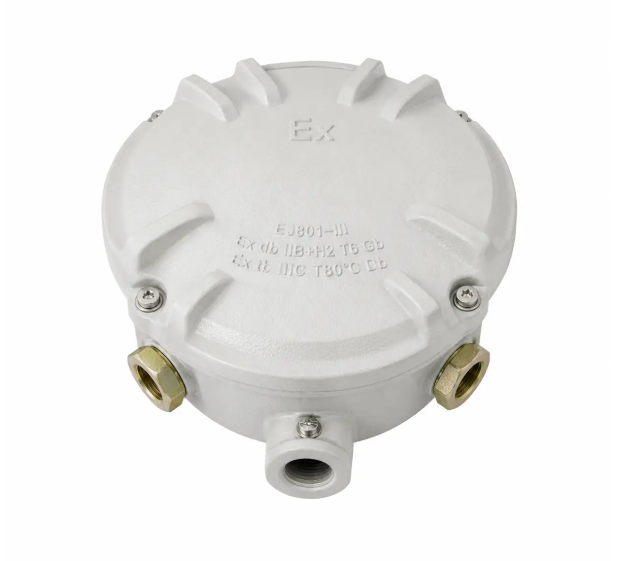
The EJB101 Series Explosion-proof Junction Box provides an example of these considerations. It offers multiple thread sizes and thread type options to accommodate different connection requirements. Its housing is made from copper-free aluminum with an RAL 7035 powder-coated surface. These features are relevant when evaluating enclosure construction and compatibility with electrical installation accessories.
The EJB101 Series is designed for harsh environments, including high temperatures, high humidity, and highly corrosive conditions. Buyers should verify the exact thread configuration, temperature limits, ingress protection rating, and certification requirements before ordering. Sunleem EEW offers this series as part of its explosion-protected electrical equipment range. Final selection should reflect the site’s hazardous-area classification and installation requirements.
Assess the Supplier Beyond the Catalogue
A useful supplier review combines technical compliance with manufacturing and delivery considerations. Buyers can request drawings, certificates, inspection records where applicable, installation manuals, and a list of included accessories. They should confirm lead times, order quantities, packaging, and how engineering changes will be communicated. Written answers make offers easier to compare.
Supplier experience matters when it translates into clear technical responses, consistent documents, and equipment suited to defined conditions. Sunleem EEW can be evaluated by comparing product information with the project specification. Buyers should verify the selected model and certification, confirm required accessories, and record unresolved questions before approving the order.
Manufacturing capability also deserves attention. Buyers should examine how suppliers control enclosure dimensions, machining consistency, surface treatment, and assembly quality. For junction boxes with different thread options, dimensional accuracy and configuration records are particularly relevant. Inspection documentation and clear procedures for handling specification changes can support repeat orders and project acceptance.
Base the Decision on Verifiable Details
Selecting a professional explosion proof enclosures manufacturer requires more than comparing price or catalogue size. Hazard classification, materials, ingress protection, certification, installation details, and maintenance needs affect suitability. Structured reviews help engineering and procurement teams compare offers and identify gaps before equipment reaches the site.
Before approval, buyers should match each enclosure’s datasheet and certificate to the intended installation area. Thread configurations, housing materials, electrical connections, and environmental limits require separate verification. When junction boxes are installed alongside LED explosion proof lighting, engineers should also check the compatibility of cable entries and associated components. Clear technical records help contractors and procurement teams coordinate installation and maintenance.