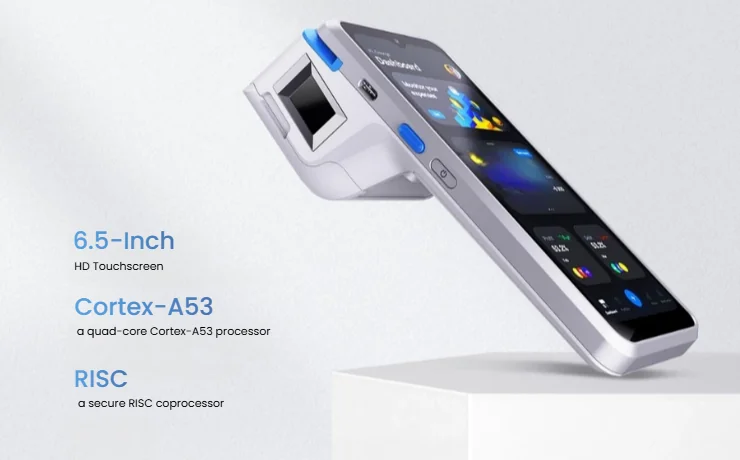
A payment terminal may sit at a retail counter, travel with a delivery worker, or serve merchants across a whole region. Although these devices handle similar transactions, their network requirements can differ significantly. A fixed checkout station may rely on Wi-Fi, while a mobile payment device needs cellular access that can be configured before it reaches the merchant.
eSIM offers a different way to assign mobile subscriptions to compatible POS devices. Instead of distributing a physical SIM for every operator arrangement, businesses can use remote provisioning to deliver supported profiles digitally. The key is to prepare each device for its first connection, activate the correct subscription, and accommodate future changes without making every adjustment a field-service task.
Preparing POS Devices for eSIM Integration
The first step is to confirm that the terminal and the intended mobile service use a compatible eSIM provisioning process. An embedded SIM securely stores operator profiles, but it does not establish a mobile connection on its own. The device also needs compatible software, a supported route to the provisioning service, and an operator subscription that can be delivered through the chosen architecture.
For payment service providers preparing a new fleet, these requirements should be settled before equipment is shipped. The project team needs to identify the service provider, determine how each device will obtain its initial profile, and establish whether merchants should complete any activation steps. When units are intended for different countries or regions, profile availability and operator support should be verified for each destination.
Hardware selection also affects the available options. BHZ’s Android Smart POS, the BHZ800, supports eSIM, dual SIM, 4G LTE, and dual-band Wi-Fi. These interfaces offer flexibility for retail counters, hospitality businesses, and mobile payment services. The remote provisioning functions available in practice, however, depend on the device configuration and compatible services.
A deployment plan should therefore cover both the equipment and the subscription workflow. It should identify who supplies operator profiles, who approves activation, how network access is verified, and who investigates failures. Agreeing on these responsibilities in advance helps prevent connectivity decisions from delaying installation.
From the First Connection to Profile Changes
The initial connection requires particular attention because a device should have a supported way to reach the provisioning service before it can download a new profile. Depending on the implementation, this may involve an existing network connection, a bootstrap profile, or another supported provisioning method. The appropriate arrangement should be confirmed for the actual device rather than assumed to be universal.
Once provisioning access is available, the process moves through three main stages.
Profile download and installation. The provisioning system makes the selected operator profile available to the device. This profile contains the subscription credentials used for mobile network authentication. The compatible eSIM component receives and installs it according to the applicable provisioning procedure.
Activation and network registration. After installation, the profile can be enabled through the supported process. The device then attempts to register with the mobile network. Before releasing it for commercial use, the deployment team should confirm successful registration and verify that payment applications can reach the services they require. Installing a profile alone does not prove that a device is ready to process transactions.
Changes after installation. Subscription requirements may change when a merchant relocates or a service provider revises its operator arrangements. If the eSIM architecture, device, and provisioning platform permit the required operations, an authorized team may download or switch profiles remotely. The result should be checked to help maintain that network access has been restored and essential services remain available.
These stages should be tested together before a large rollout. Teams need to verify not only profile delivery, but also activation, network access, and recovery procedures for interrupted operations.
Coordinating POS Fleets Across Different Markets
Remote profile management becomes particularly useful when a payment provider serves merchants across multiple locations. Consider a provider distributing devices to hundreds of shops. If every unit requires a physical SIM selected for a specific market, the provider should coordinate card inventory, installation, and replacement. Later changes to the operator arrangement can create further logistical work.
With a compatible remote provisioning service, supported profiles can be assigned digitally. Central teams can coordinate activation procedures and monitor which devices have completed the process. This approach can make large rollouts easier to organize, especially when equipment is shipped directly to merchants instead of being configured by technicians at each site.
International expansion brings additional considerations. A subscription suitable for one country may not provide the same service in another. Before sending equipment overseas or entering a new market, businesses should check operator availability, roaming conditions, local requirements, and profile provisioning arrangements. Where the required subscriptions and services are available, remote provisioning can reduce the need to replace physical SIM cards whenever regional requirements change.
It is also important to distinguish profile administration from broader device management. Payment applications, Android software, security settings, and hardware faults may require separate management tools. Clear separation helps support teams determine whether a problem originates from the subscription, the mobile network, or the device itself.
Reducing Physical SIM Handling While Maintaining Control
The practical advantage of eSIM is not simply the absence of a removable card. It is the ability to manage supported subscription operations digitally, reducing the need to handle physical SIMs whenever equipment is prepared for a new market or its service arrangements change.
For payment service providers, this can reduce card distribution and installation work. It may also allow subscription assignments to be aligned with the destination of each device, rather than requiring every physical SIM to be selected and installed before shipment. These benefits depend on compatible equipment, available profiles, and agreements with the relevant operators.
Remote changes still require appropriate controls. Businesses should define who can authorize profile operations, how successful changes are confirmed, and what procedures apply if a device cannot reconnect. These safeguards matter because interruptions to payment connectivity can affect merchant operations and transaction availability.
When choosing an Android Smart POS Terminal, businesses should assess eSIM alongside operator compatibility, installation procedures, and the tools available for ongoing support. The objective is to reduce unnecessary site visits while retaining oversight of subscription changes and network access.
BHZ offers the BHZ800 Android POS hardware with eSIM and multiple connectivity interfaces. For payment providers managing a distributed merchant network, the important next step is to match the device with a suitable operator and provisioning arrangement, then test the complete process—from initial activation to later profile changes. This preparation helps make remote subscription management a practical part of POS operations rather than a capability considered only after equipment has been deployed.