Corrosion testing produces more useful results when the exposure sequence, specimen handling, and recordkeeping are treated as one workflow. A well-organized process helps laboratories maintain consistent test conditions, compare specimens fairly, and trace results back to the exact cycle and sample history. For coating, automotive, metal, and electronic applications, this discipline can make cyclic corrosion data easier to interpret and use.
Start With a Clearly Defined Test Sequence
A cyclic corrosion program should begin with a defined sequence rather than simply placing specimens into a cabinet and starting the timer. Different products may need different combinations of salt spray, drying, humidity, condensation, or other controlled environments. The selected sequence should reflect the applicable test method and the purpose of the evaluation.
This is particularly important when the goal is to simulate changing outdoor conditions. Continuous salt spray can provide useful comparative information, but cyclic methods introduce repeated transitions between wet and dry environments. The sequence, duration of each stage, and number of repetitions therefore become part of the test definition. Keeping these parameters consistent helps laboratories compare formulations or materials without introducing unnecessary variation between runs.
Prepare Specimens Before They Enter the Cabinet
Specimen records begin before exposure starts. Each panel or component should be identified with enough information to connect it to the formulation, production batch, substrate, coating system, preparation method, and test request. Surface preparation and coating thickness should also be recorded where they influence the evaluation.
The physical arrangement inside the cabinet matters as well. Specimens need to be positioned according to the relevant method and kept from interfering with one another. Labels, photographs, sample maps, and pre-test condition records can provide a useful reference when specimens are inspected after several cycles.
This preparation stage can prevent a common problem in laboratory testing: having clear results but insufficient information to explain why one specimen performed differently from another.
Manage Wet and Dry Transitions Carefully
The defining feature of cyclic corrosion testing is the controlled movement between environmental stages. A typical program may combine salt spray with drying and high-humidity conditions, while automotive or other application-specific methods may require more complex sequences.
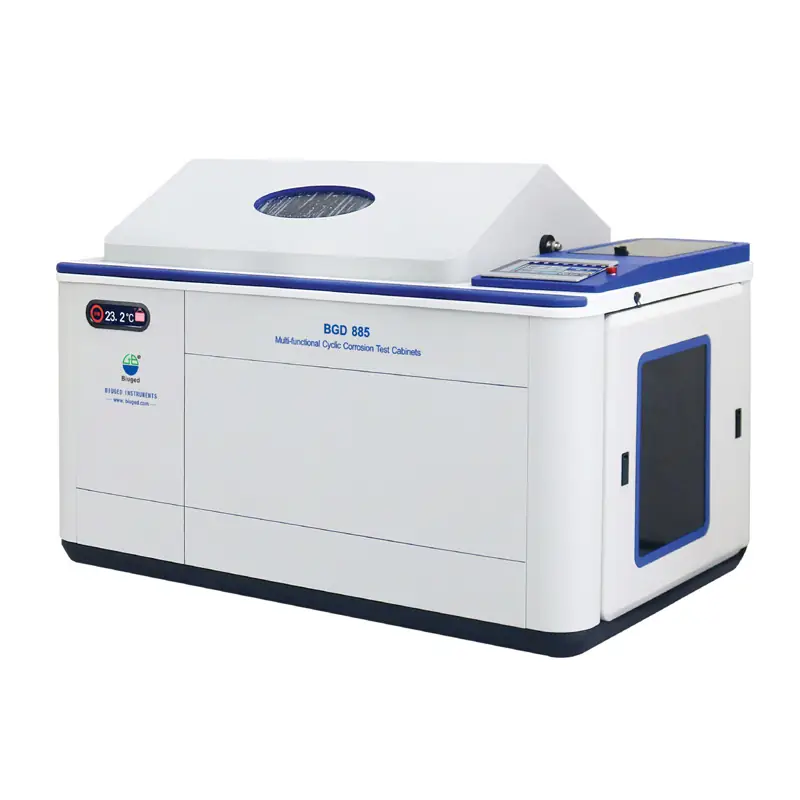
A suitable cyclic corrosion test chamber should therefore do more than generate salt fog. The BGD 885 Multi-functional Salt Spray Corrosion Test Cabinet is designed around multiple test modes, including neutral salt spray, acetic acid salt spray, copper accelerated acetic acid salt spray, Prohesion Testing, and cyclic corrosion testing. This type of multi-mode configuration allows laboratories to use one system for different corrosion programs while keeping the exposure process within a controlled environment.
For laboratories working across several coating and material applications, BIUGED INSTRUMENTS places particular emphasis on controlled testing equipment that can support different environmental exposure requirements within a structured laboratory workflow. Precise spray delivery, stable temperature control, humidity management, and reliable stage-to-stage switching all contribute to consistency. When transitions are programmed rather than manually transferred between separate cabinets, the risk of timing differences or handling-related variation can also be reduced.
Build Records Around Each Test Cycle
Specimen records should follow the same structure as the test program. In addition to basic sample identification, laboratories can record the start date, test method, cycle definition, exposure duration, inspection intervals, and any deviations observed during the run.
Digital recording is especially useful when tests continue over many cycles. The laboratory can maintain a history of operating conditions and connect observations to specific exposure stages rather than relying on handwritten notes taken after the test. Data exports also make it easier to preserve records for internal review, customer communication, or later comparison.
Photographs can complement numerical records. A consistent imaging method, including similar lighting, distance, and sample orientation, makes visual changes easier to compare. For coated panels, records may include the appearance of corrosion, blistering, peeling, staining, or changes around deliberately damaged areas such as scribe marks.
Review Results Against the Test Objective
A corrosion test should be evaluated against a defined objective rather than treated as a simple pass-or-fail exercise. Different applications may focus on different outcomes, including corrosion spread, coating breakdown, blistering, adhesion changes, or the condition of exposed metal.
The same specimen may also be inspected at several checkpoints. Recording changes after a fixed number of cycles can show whether degradation remains gradual or becomes more pronounced at later stages. When several formulations are tested under identical conditions, this structured approach provides a stronger basis for comparison than an isolated final inspection.
Standardized evaluation also improves communication between laboratory teams, product developers, and quality departments. Everyone can work from the same test definition and specimen history, making unexpected results easier to investigate.
Integrating Equipment, Records, and Repeatability
The reliability of cyclic corrosion testing depends on more than the cabinet itself. A repeatable workflow connects specimen preparation, programmed exposure, condition monitoring, inspection, and record retention. When these elements are managed together, laboratories can reduce avoidable variation and build more useful historical data for product development and quality control.
The BGD 885 is intended for laboratories that need several corrosion exposure modes within one platform, with programmable operation and controlled environmental conditions supporting repeatable testing. Its multi-function design is particularly relevant where different standards or material systems must be evaluated without creating separate workflows for every test type.
A More Traceable Approach to Corrosion Testing
A practical corrosion workflow should make every stage easy to identify, from specimen preparation to the final evaluation. Clear cycle definitions, controlled transitions, detailed specimen records, and consistent inspection methods help turn individual test runs into reliable comparison data.
Across its testing portfolio, BIUGED INSTRUMENTS focuses on practical laboratory equipment for coatings, materials, and related quality-control applications. The BGD 885 combines multiple corrosion exposure modes in one cabinet, giving laboratories a flexible platform for different testing programs and specimen evaluation workflows.
Laboratories reviewing equipment options can visit BIUGED INSTRUMENTS to learn more about their corrosion testing solutions and discuss configurations suited to specific standards, specimen types, and workflow requirements.