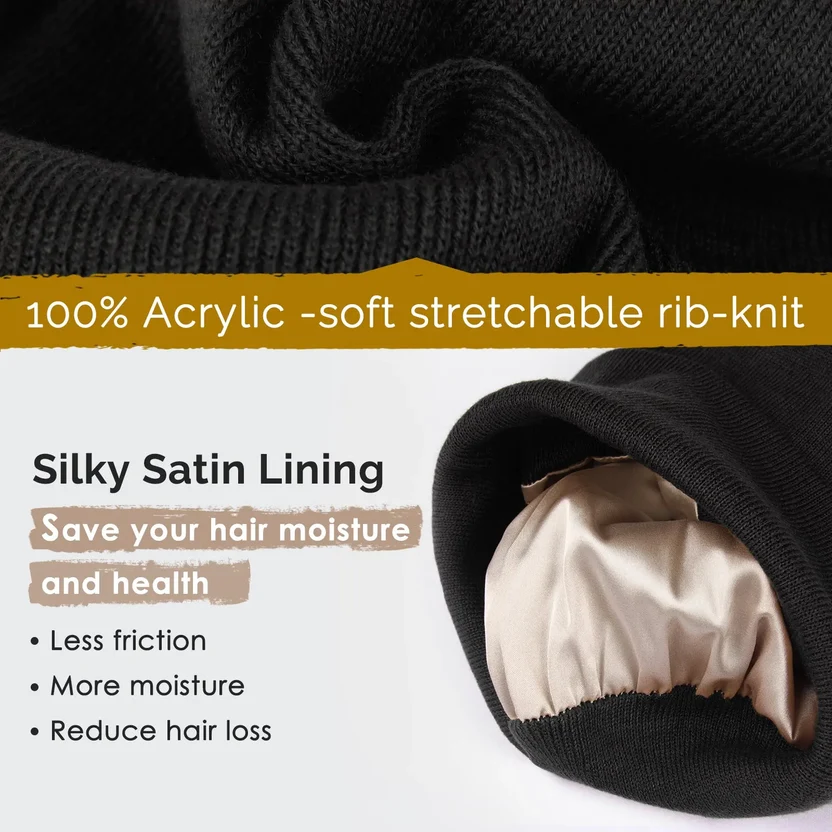
Cold weather creates a difficult trade-off for hair care: staying warm often means covering the hair with materials that increase friction. Wool and acrylic knits can rub against strands, encourage static, flatten curls, and contribute to moisture loss throughout the day.
Switching to winter hats lined with satin offers a practical way to protect hair without giving up essential cold-weather coverage. The smoother interior can help limit friction, static, and moisture loss while the outer layer keeps the head warm. For anyone dealing with winter frizz, dryness, tangles, or flattened styles, the change can make everyday cold-weather wear much easier to manage.
What Happens to Hair Under a Traditional Winter Hat?
Cold, dry winter air can leave hair feeling drier and more difficult to manage, especially when combined with indoor heating and frequent exposure to wind. When a standard wool or acrylic beanie is pulled over dry winter hair, repeated contact can increase mechanical friction against the strands. Coarse yarn can create repeated friction against the hair surface as the wearer moves between indoor and outdoor environments.
This repeated friction can increase static, making flyaways more noticeable and dry hair harder to control under scarves and coats. Furthermore, tightly fitted knit caps compress hair flat against the scalp for hours, breaking up curl patterns and leaving flat, distorted shapes when removed.
The problem can become more noticeable when hair moves repeatedly between heated indoor spaces and cold outdoor air. These changes may leave already-dry strands harder to manage, while additional friction from a tightly fitted hat can further increase frizz around the crown, hairline, and ends.
Why Satin Makes a Difference Against Winter Friction
The main advantage of a satin lined beanie is that it combines cold-weather insulation with a smoother surface against the hair. The outer knit can block cold air and retain heat, while the smooth inner layer reduces direct contact between coarse fibers and the hair.
Instead of catching on rough yarn threads, hair can move more smoothly against the satin lining. This dual-layer design delivers the thermal performance needed for freezing days while protecting strands from constant surface abrasion during movement.
This difference is particularly useful for people who wear winter hats for several hours during commuting, outdoor work, travel, or daily errands. A smooth interior can be particularly useful when a hat remains in contact with the hair for several hours.
How a Smooth Lining Helps Hair Hold Onto Moisture
Rough wool and cotton surfaces can come into frequent contact with hair and may transfer some natural oils or styling products away from the strands during wear. For hair that is already dry, this additional contact can make the texture feel rougher and less manageable.
Satin has a smooth, low-absorption surface compared with many traditional textile linings, which can help reduce unnecessary transfer of hair oils and styling products during wear. This reduced transfer of natural oils and styling products can be useful for textured, curly, or thick hair that feels drier in winter.
This can be particularly useful for curly and coily hair, which may become rougher and more difficult to reshape when exposed to dry air and repeated friction. Longer hair can also benefit because the ends are more likely to rub against the inner surface of a hat throughout the day.
Can Satin-Lined Hats Protect Curls and Styled Hair?
Textured curls and protective styles require extra care during months when heavy headwear is mandatory. Traditional caps crush curl clumps together, creating knots and tangles that take considerable time to comb out later.
A satin lining gives curls and textured strands a smoother surface to move against, which can help reduce unnecessary tangling and disruption while the hat is worn. Protecting the hairstyle underneath can reduce the need for extensive restyling after outdoor commutes.
What Makes a Winter Hat Comfortable for All-Day Wear?
Finding a winter hat that feels good during long hours outdoors requires evaluating both exterior weight and interior fit. A comfortable hat should insulate against biting winds without putting excessive, pinching pressure on your forehead or temples.
Secure construction can help keep the satin lining anchored to the outer knit and reduce bunching or slipping during wear. Balanced elasticity keeps the cap snug over your ears while accommodating varying head shapes and hair volumes smoothly.
Is Switching to a Satin-Lined Winter Hat Worth It?
Making the switch to satin-lined cold-weather headwear offers practical advantages for anyone looking to avoid winter hair stress. The primary reasons to upgrade include:
- Less friction: Minimizes tangles and mechanical stress during outdoor movement.
- Less moisture transfer: Helps reduce unnecessary contact between hair and absorbent or rough textile fibers.
- Lower static: Decreases flyaways and clinging static in dry winter air.
- Better curl preservation: Helps reduce flattening and disruption of curls and styled hair.
- Warmth with a smoother interior: Combines cold-weather coverage with a more hair-friendly contact surface.
A good winter hat should do more than keep the head warm. The lining material, construction quality, fabric weight, and overall fit can all affect how well it protects hair while remaining comfortable throughout the day. Satin-lined designs from YANIBEST combine a smooth inner surface with cold-weather knit construction for everyday winter wear.