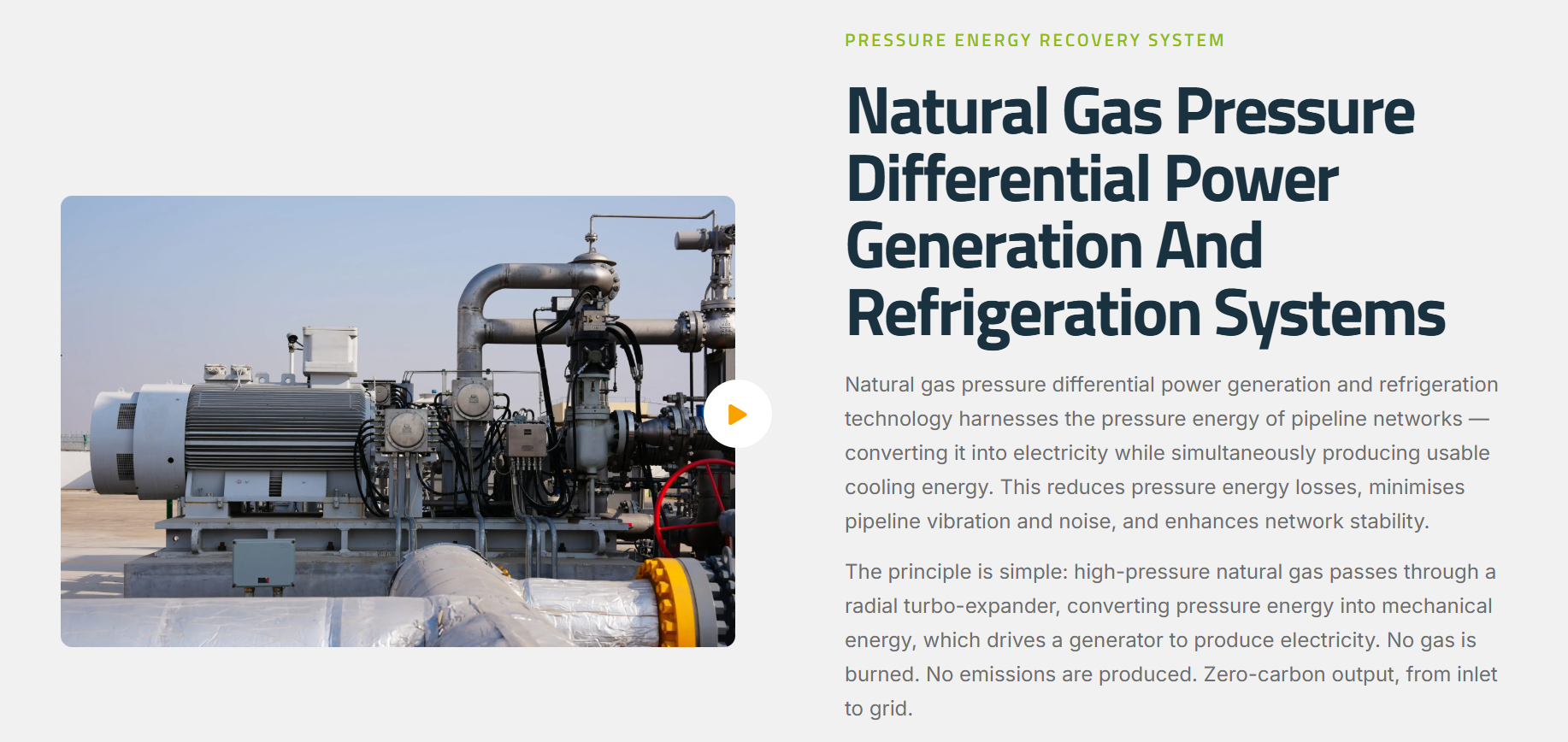
Industrial facilities consume massive volumes of natural gas for heating, chemical processing, and power generation. This gas typically arrives from regional transmission pipelines at extremely high pressures. Before it can be safely utilized within the plant limits, this pressure must be drastically reduced. Traditionally, operators rely on standard throttling valves to achieve this reduction, a process that securely controls gas flow but dissipates valuable thermodynamic energy as wasted environmental heat.
Modern engineering offers a more sustainable alternative. By replacing or bypassing standard throttling valves with rotating expansion turbines, facilities can capture this wasted kinetic energy. The spinning turbine drives a generator, producing clean electricity directly on-site. However, transitioning to this highly efficient operational model requires careful planning. A successful project relies entirely on a comprehensive feasibility review to ensure long-term economic and mechanical viability.
The Importance of a Structured Feasibility Review
Implementing an energy recovery system is never a standard, off-the-shelf purchase. Every industrial facility operates under entirely unique conditions. Upstream pipeline pressures fluctuate, seasonal demands drastically alter flow rates, and specific chemical compositions change how the gas behaves during rapid expansion. Because of these immense variables, project economics and technical success depend entirely on site-specific data.
A formal feasibility review systematically eliminates engineering guesswork. It breaks the complex procurement and installation process into logical, verifiable steps. This rigorous evaluation protects the facility’s capital investment by identifying potential thermodynamic roadblocks early in the planning phase. By thoroughly vetting the site data upfront, operators ensure the final equipment will perform reliably while maintaining the primary, non-negotiable goal of uninterrupted, safe natural gas distribution to the plant.
Step One: Comprehensive Site Assessment
The review process begins with a deep dive into historical operating data. Engineers must collect twelve to twenty-four months of continuous pressure and flow logs. This data reveals the absolute minimums, peak maximums, and common operating averages. A successful pressure to power initiative requires a consistent, reliable pressure differential and steady gas volume to justify the required capital expenditure.
Alongside pressure and flow, engineers must analyze the site’s thermal capacity. Expanding gas causes severe temperature drops, creating significant freezing risks. The assessment calculates exactly how much pre-heating the gas requires to prevent hydrate formation and protect downstream piping. Evaluating the availability of existing industrial boilers or waste heat sources is a critical component of this initial site survey.
Step Two: Custom Solution Design and Aerodynamic Modeling
Once the site assessment yields a concrete data profile, the focus shifts to custom engineering. Using advanced computational fluid dynamics, engineers design the specific aerodynamic profile of the turbine wheel. The internal geometry of the expansion machinery must perfectly match the facility’s most frequent flow conditions. This precision engineering maximizes mechanical torque and overall pressure recovery efficiency throughout the year.
The solution design phase also encompasses control integration. Engineers map out how the turbine’s programmable logic controllers will communicate with the central plant network. Furthermore, this stage finalizes the safety architecture. Designers must size and specify the automated bypass valves that will instantly take over pressure regulation duties if the turbine requires a sudden, unexpected shutdown.
Step Three: Precision Manufacturing and Rigorous Testing
With the engineering blueprints approved, physical manufacturing begins. Material selection is scrutinized to ensure the turbine housing and high-speed rotor can withstand the specific chemical composition of the facility’s gas stream. Precision machining is required to balance the rotor perfectly, as these advanced turbines often operate at tens of thousands of revolutions per minute.
Before any equipment leaves the manufacturing facility, it undergoes rigorous factory acceptance testing. Engineers conduct mechanical run tests to verify vibration levels, bearing performance, and oil system integrity. They also simulate control system faults to ensure the safety logic responds correctly. This comprehensive testing phase prevents costly commissioning delays once the heavy machinery arrives at the actual industrial site.
Step Four: Field Commissioning and Integration
The final step of the structured process is on-site commissioning. Technicians securely install the turbine and generator onto their prepared foundations, aligning the high-speed shafts with exact laser precision. The main pipeline is carefully connected, and the electrical output is strictly synchronized with the facility’s internal power grid to ensure stable voltage. All safety bypass valves are then physically tested under actual pipeline pressures to guarantee rapid response times.
Commissioning also involves comprehensive training for the local operators. The facility’s staff must fully understand the startup sequences, routine maintenance requirements, and emergency shutdown procedures. Once the site personnel are comfortable with the new digital controls, the unit is formally handed over, transforming a standard regulating station into an active power generation asset.
Understanding Final Project Economics
Ultimately, the feasibility review dictates the financial reality of the installation. If the initial site assessment reveals inconsistent flow or insufficient pressure differentials, the projected payback period will stretch unacceptably. Conversely, facilities with steady, high-volume operations can often recover their capital costs rapidly through offset electricity purchases. Accurate, long-term data collection remains the only way to build a reliable, bankable economic model that justifies the initial infrastructure upgrade.
Building a Bankable Business Case Through Structured Feasibility Review
Ultimately, the feasibility review dictates the financial reality of the installation. If the initial site assessment reveals inconsistent flow or insufficient pressure differentials, the projected payback period will stretch unacceptably. Conversely, facilities with steady, high-volume operations can often recover their capital costs rapidly through offset electricity purchases.
Accurate, long-term data collection remains the only way to build a reliable, bankable economic model that justifies the initial infrastructure upgrade. Joulong Energy Technology Co., Ltd. develops turbine expanders and natural gas pressure differential power generation systems with in-house R&D, offering customized solutions backed by site-specific engineering and feasibility support. Contact Joulong to discuss your facility’s operating data and begin the feasibility review process.