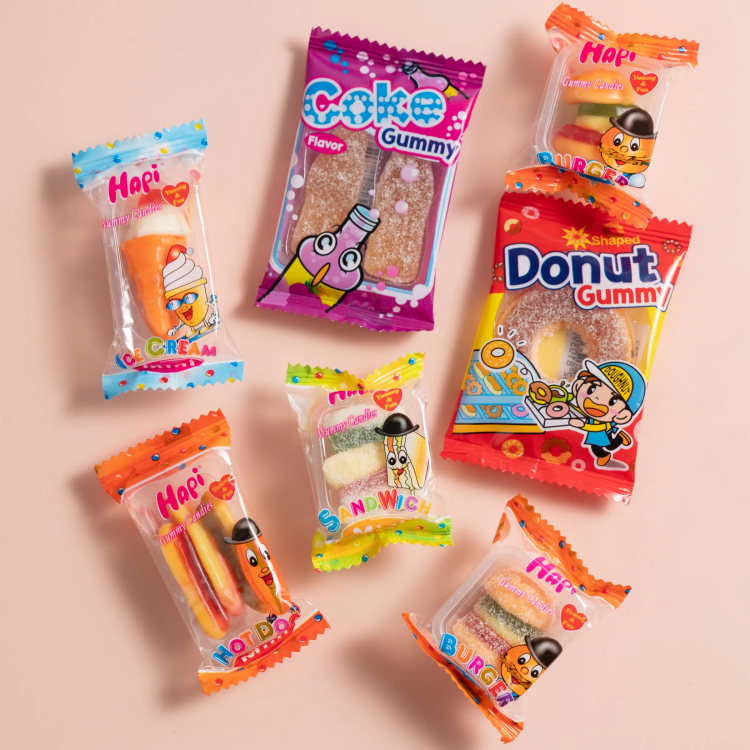
Walk into many supermarket candy aisles today, and the visual landscape can appear remarkably similar. Bears, worms, rings, and generic fruit shapes often fight for consumer attention with near-identical flavor profiles and comparable price points. To escape this commoditization challenge, forward-looking candy brands and retailers are actively moving beyond standard, off-the-shelf SKUs. Instead, they are utilizing custom gummies as a deliberate vehicle for brand identity. By leveraging proprietary shapes, signature flavors, and distinctive packaging, companies can transform a basic commodity into a valuable proprietary asset.
A significant driver behind this shift is an evolving consumer base. Millennials and Gen Z buyers frequently seek out underlying narratives and brand identity, rather than just purchasing simple sugar. A confectionery item shaped like a recognizable brand mascot or a specific product carries narrative weight that generic geometric shapes generally cannot replicate. Increasingly, companies are choosing to partner with a specialized custom gummy manufacturer to develop these proprietary shapes, turning them into edible brand ambassadors. This article examines why custom confectionery operates as a strategic branding investment and outlines what capabilities organizations should look for in a manufacturing partner.
The Shift from Commodity to Branded Confectionery
For decades, the confectionery industry primarily competed on flavor variety and unit price. Today, however, category growth is increasingly driven by brand equity and experiential differentiation. Direct-to-consumer (DTC) candy startups have effectively demonstrated that introducing a unique product form can help build a defensible market position, often without requiring massive traditional advertising budgets. When the product itself is inherently recognizable, it acts as its own marketing tool.
The rise of social media platforms has accelerated this shift toward visual distinctiveness. Digital platforms inherently reward striking visual content, and custom gummies designed for high shareability can generate organic reach that conventional advertising struggles to match. Traditional retailers have also joined this trend, frequently utilizing store-brand custom shapes to reinforce their own unique identity within the highly competitive supermarket candy aisle.
How Custom Shapes Build Instant Brand Recognition
Neuroscience research suggests that the human brain processes images significantly faster than written text. Consequently, a distinctive product shape can achieve strong brand association within a fraction of a second. Much like certain heritage brands are widely associated globally with the bear or the worm, unique structural shape functions as tangible brand equity within the modern confectionery category.
On the crowded retail shelf, a capable custom gummy manufacturer can successfully translate a brand logo, character mascot, or flagship product into a tangible, edible form. This structural novelty interrupts the automatic visual scanning pattern of everyday shoppers. Such visual disruption frequently drives the initial purchase, while repeated exposure to the unique shape builds lasting brand recall. Various sectors utilize this strategy effectively; sports nutrition brands might develop dumbbell shapes, children’s brands frequently employ character forms, and luxury confectioners use intricate monogram designs to achieve category-specific brand anchoring.
Packaging and Flavor as Extensions of Brand Identity
Effective custom branding extends well beyond the physical shape of the candy to encompass Pantone-matched colors, signature flavor profiles, and distinctive packaging formats. When a brand develops a proprietary “mystery berry” flavor or a specialized metallic finish for its packaging, it establishes a unique sensory fingerprint. Together, these elements create a comprehensive, multi-sensory brand experience that engages taste, sight, and touch simultaneously.
Implementing seasonal and limited-edition custom gummies serves as a particularly effective strategy for brand activation. Items like Valentine hearts, winter snowflakes, Halloween pumpkins, and specialized collaboration drops help generate scarcity-driven demand and stimulate social media conversation. Brands can iterate rapidly through these limited production runs, allowing them to test new concepts in the market without disrupting their core, year-round product lines.
The Manufacturing Challenge of Translating Brand Concepts into Edible Products
The technical gap between a designer’s initial 3D render and a functional, production-ready candy mold is substantial. Variables such as material shrinkage during the cooling phase, necessary draft angles for clean demolding, and uniform wall thickness all determine whether a visual concept can survive at commercial scale. Fine details, such as thin character appendages or raised text, often fail during the commercial gel casting process. Color matching presents parallel technical challenges, as screen-accurate brand colors frequently behave quite differently under the intense heat and natural acidity involved in candy production.
Market validation typically demands low-risk prototyping. Therefore, a highly capable custom gummy manufacturer can provide rapid mold prototyping—frequently via 3D-printed or specialized silicone prototype tooling—alongside flexible pilot production lines. This technical support allows brands to evaluate physical samples before committing to full-scale tooling investments. Partnering with facilities that lack this prototyping capability can force retail brands to assume a disproportionate amount of market and financial risk.
Evaluating Partnership Capabilities for Brand-Driven Gummy Programs
Selecting the appropriate manufacturing partner requires organizations to carefully assess several operational criteria. Key factors include the depth of the research and development team, which dictates the speed from concept to physical sample, and mold fabrication capabilities, ranging from CNC machining to specialized carving. Furthermore, buyers should evaluate minimum order flexibility to determine if the facility can support small-batch testing. A broad formulation library for proprietary flavor development and comprehensive certification coverage—such as FSSC 22000, ISO 22000, Halal, or Kosher where relevant—are also critical evaluation points.
HAPI brings 25 years of confectionery expertise to its brand partnership programs. A dedicated R&D team of five supports clients with end-to-end customization: proprietary custom gummy shape development from concept sketches, Pantone-accurate color matching across multi-layer deposits, signature flavor formulation from a library of 50+ profiles, and coordinated packaging design that aligns the edible product with its retail presentation. With OEM services starting at 500 cartons and rapid prototyping cycles that move from sketch to physical sample in 15–25 days, HAPI enables brands to test seasonal concepts and limited-edition drops without committing to full-scale tooling. Proven IP-grade shape fidelity—demonstrated through licensed product lines—ensures that brand assets translate precisely from digital vision to shelf reality.