Lightweight shelter equipment is often viewed as a compromise: less material is taken to less durability. Yet outdoor performance is shaped by far more than weight alone. Fabric construction, protective coatings, tension management, attachment points, and intended use all influence whether a shelter can withstand repeated trips. For hikers and backpackers, understanding these factors offers a more realistic way to judge lightweight equipment and separate genuine performance from common assumptions.
Myth One: Less Weight Always Means Less Durability
The idea that lightweight automatically means fragile comes from comparing material thickness rather than overall construction. A shelter can reduce unnecessary weight while still using technical fabrics and structural features designed for outdoor applications. The important question is not simply how much fabric is used, but how effectively that fabric performs under expected conditions.
Modern outdoor shelters often use ripstop materials because the woven structure is designed to limit the spread of small tears. Protective coating can also add resistance against moisture while preserving a relatively low overall weight. Meanwhile, carefully positioned attachment points help distribute tension when the shelter is pitched.
For backpackers, this balance matters because every unnecessary gram becomes noticeable during long hikes. Carrying a lighter shelter can make a meaningful difference on multi-day routes, but the weight savings only have practical value when the equipment remains suitable for repeated outdoor use. Durability should therefore be judged as a combination of material quality, construction, and intended application.
Myth Two: Waterproof Protection Requires Heavy Fabric
Another common assumption is that reliable rain protection depends on thick and heavy fabric. Waterproof performance is influenced by fabric treatment and shelter design as much as by thickness. Coating can create a water-resistant barrier without requiring a significantly heavier textile.
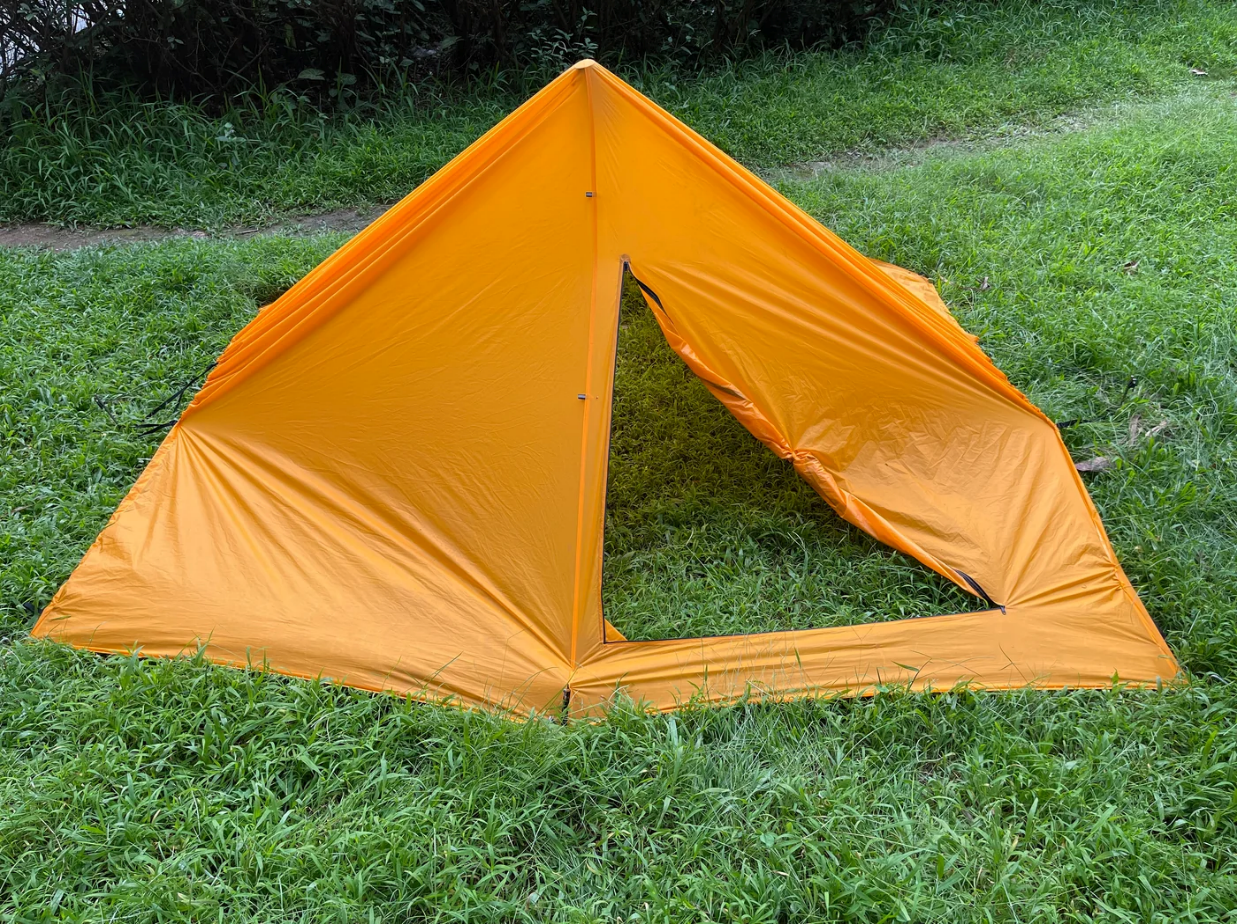
The Wind Anchor 10D Flysheet from THECATAL provides a useful example of this principle. The product page describes a 10D ripstop nylon construction with a high-performance PU coating, designed to shed rain while also providing wind protection. Its flysheet format is intended to add weather coverage without turning the shelter into a bulky piece of equipment.
A waterproof flysheet should therefore be evaluated according to how its material, coating, and configuration work together. Weather protection is not determined by fabric thickness alone. Setup quality also matters because a poorly tensioned flysheet can allow water to pool or gaps to form, reducing the practical benefits of an otherwise capable material.
Myth Three: A Lightweight Flysheet Has Only One Purpose
Some campers associate a lightweight outer layer with a single task: covering the tent when it rains. That limits the potential usefulness of the product and overlooks the flexibility that modular shelter systems can provide.
The Wind Anchor 10D Flysheet is built as a versatile modular component with multiple usable setups. When stretched over a tent, it adds another layer of weather protection over the tent. It can form extra covered space for packs, footwear, and wet clothing when configured for gear storage. It can also be rigged between trees or trekking poles to build out a minimalist shelter with no inner tent underneath.
This flexibility can improve the practical value of lightweight equipment. A hiker may choose one configuration for a rainy overnight stop and another for a quick daytime rest area. Instead of carrying separate shelter components for every situation, a versatile flysheet can support different campsite arrangements while remaining relatively easy to pack.
Myth Four: Durability Is Determined by Fabric Alone
Even a strong technical fabric can perform poorly if the surrounding structure is not designed appropriately. Outdoor shelters are exposed to wind pressure, uneven ground, repeated pitching, and accidental contact with vegetation. These forces can place stress on attachment areas and seams.
For this reason, durability should also be considered through the way tension is distributed. A well-designed flysheet can use multiple fixing points to spread loads across the shelter instead of concentrating pressure on a small section. This principle is especially useful when conditions change, and users need to adjust the pitch.
The same applies to everyday handling. Rough ground, sharp branches, unnecessary friction, and improper storage can damage lightweight materials regardless of their original specifications. Responsible pitching and packing are therefore important parts of maintaining technical outdoor equipment.
What Actually Determines Long-Term Flysheet Performance?
A robust practical assessment starts with material performance: how well the fabric fits its target operating conditions, and whether its coating delivers sufficient environmental protection. It further examines structural integrity, specifically whether the shelter can be reliably tensioned. Finally, real world usability comes into play, including support for varied setup configurations and design compatibility with the chosen camping style.
The tent fly cover is most useful when these factors are considered together. The Wind Anchor 10D Flysheet combines lightweight ripstop nylon, a protective coating, and multiple usage options, while the product page also lists a two-year warranty.
Maintenance remains equally important. Users should avoid dragging the fabric across rough surfaces, choose campsites without unnecessary abrasion hazards, and allow wet equipment to dry before long-term storage. These simple practices can reduce avoidable wear and help preserve the fabric and coating over repeated trips.
A Better Way to Judge Lightweight Durability
Lightweight and durable should not automatically be treated as opposing qualities. A better evaluation considers material technology, weather protection, structural design, versatility, and user practices together.
THECATAL approaches lightweight shelter design around this balance, using the Wind Anchor flysheet as a flexible component rather than merely a disposable rain layer. For outdoor users, the real measure of durability is not simply how heavy a product feels, but how effectively its construction supports the conditions and activities it is designed to handle. The THECATAL approach shows why lightweight shelter performance is better understood through engineering and practical use than through weight alone.