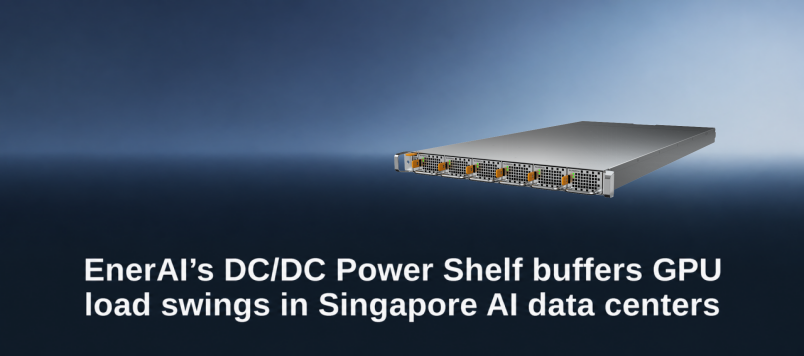
The DC-ATS from EnerAI supports two independent DC inputs rated at 270V DC or 400V DC and transfers the load to the alternate source when required. EnerAI specifies power-off switching in less than 350 ms, system efficiency above 98% and peak efficiency of 98.8%. Each 1U module delivers 15 kW, allowing capacity to be configured for the intended loads. In a Singapore data center with 800V DC facility distribution, the electrical design identifies the DC-ATS transfer point by its stated input rating and the circuit it serves.
Dual-source DC switching complements the facility power architecture
EnerNeo converts medium-voltage AC to 800V DC at the facility level. EnerAI’s DC-ATS serves a transfer function between two DC sources rated at 270V DC or 400V DC. A single-line drawing can show the conversion and transfer stages at their respective voltages and identify how each serves the connected load. This gives a Singapore facility team a clear view of where the modular switching equipment belongs within the wider power design.
The Open Compute Project has published reference work on medium-voltage conversion to 800V DC. In a retrofit, such an architecture can introduce an 800V DC bus at the facility or row level while lower-voltage circuits remain in use. If transfer is required at the higher-voltage bus, the proposed model needs a documented input rating for that interface. A transfer point on a lower-voltage circuit has its own input and output requirements. The installer and commissioning team need both positions to be clear on the same drawing [1].
15 kW modules provide scalable capacity and hot-swap support
EnerAI specifies 15 kW of power per 1U DC-ATS module and describe flexible system capacity according to the application. EnerAI also states that power modules support hot-swap during operation. For a configured system, the equipment schedule can identify the installed modules and the load supported during service. That makes the modular capacity and maintenance scope visible alongside the source-transfer function. The commissioning plan can then demonstrate the selected configuration under the conditions intended for the site.
EnerAI DC-ATS with 15 kW Power Modules
Site acceptance can document both events at the same representative load. A transfer test records the voltage seen downstream and the duration of the interruption. A maintenance-related test records available capacity and operator alarms when a power module is unavailable. Keeping separate records helps the site interpret the result if either the power source or the module configuration changes later. It also clarifies which operating procedures apply when the switch continues to supply the load in a reduced configuration.
An equipment schedule is especially important when an upstream converter and transfer switch come from different suppliers. Recording the proposed terminal voltages, acceptable operating ranges and responsibilities for interface testing gives both suppliers the same basis for their offers. The control team can then verify which events should start a transfer and which indications the operator will see when one source is outside its accepted range [1].
The load’s ride-through limit sets the transfer requirement
EnerAI specifies a power-off switching time below 350 ms. The connected load’s ride-through characteristics determine the acceptance criteria for that transfer point. Site testing can record the interval at the device and the voltage seen by downstream equipment. EnerAI also lists system efficiency above 98%, with a peak of 98.8%, as a separate operating characteristic. The test records can distinguish transfer behavior from conversion efficiency and module maintenance.
Loss of the primary source, loss of the standby source and return to normal operation are separate cases. The design should show which source is available, what the transfer controller monitors and whether the sources share any upstream components. A common component can change the behavior expected from a two-source arrangement. Those cases belong in the acceptance plan at the same operating conditions used to compare bids [1].
Singapore projects can define the transfer stage by voltage and load
For a HVDC data center tender, the datasheet and equipment schedule should both identify the rated input and operating range, output rating and the anticipated load during transfer. The single-line should show where the device sits and which sources and equipment it connects. A retrofit also needs an acceptance sequence compatible with the circuits that remain in service. Together, the rating and the test conditions establish whether a proposed transfer switch fits its assigned point and meets the continuity requirement of the connected load [1].
A retrofit can also retain both a legacy DC circuit and a new 800V DC path. In that situation, a bid schedule should name the load and circuit served by each transfer device. Assigning the device to a specific circuit prevents the facility’s architecture label from standing in for the terminal ratings and establishes which downstream equipment belongs in the acceptance test [1].
EnerAI’s DC-ATS brings dual-source switching, 15 kW modular capacity and online hot-swap support to compatible DC circuits in a Singapore data center. Its stated 270V DC or 400V DC inputs identify the transfer interface within the facility’s wider power architecture. The below-350 ms switching specification and the connected load’s ride-through characteristics provide the basis for site acceptance.
Frequently asked questions
What input and switching ratings does EnerAI specify for its DC-ATS?
EnerAI lists two independent 270V DC or 400V DC inputs and power-off switching below 350 ms. Each 1U module delivers 15 kW, and the modules support hot-swap during operation.
What efficiency and modularity features does the DC-ATS offer?
EnerAI specifies system efficiency above 98%, with peak efficiency of 98.8%. Its 15 kW, 1U modules allow flexible capacity configuration and hot-swap during operation.
References
[1] Google, Microsoft, and NVIDIA, Solid State Transformer (SST) Specification: Medium Voltage to 800 VDC Power Conversion Platform, rev. 0.3.0. Open Compute Project, June 22, 2026.