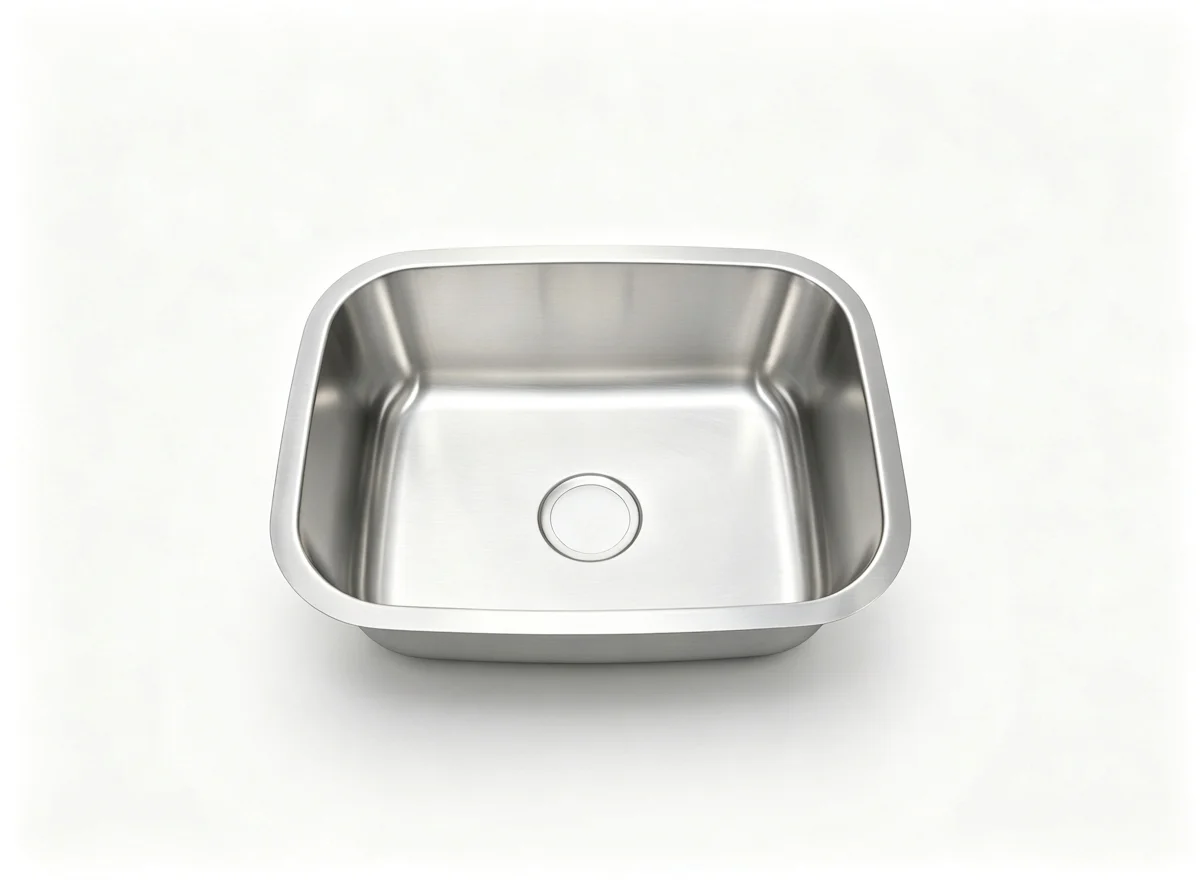
Kitchen design in 2026 continues to focus on making effective use of available space while maintaining everyday functionality. For cabinet manufacturers, property developers, kitchen distributors, and hospitality project buyers, a single basin kitchen sink offers a practical option. Its uninterrupted bowl accommodates larger cookware, while its straightforward configuration can support consistent product selection across residential and commercial projects.
Why One Spacious Bowl Is Influencing Kitchen Layouts
The appeal of a single-bowl sink comes from how it uses the available workspace. Unlike a divided basin, one continuous compartment can accommodate larger pots, baking trays, and awkwardly shaped utensils without requiring users to work around a central partition. This arrangement can be useful in compact apartments, rental developments, and kitchens where countertop space serves several purposes.
For designers, this configuration encourages closer coordination between the sink, preparation area, and surrounding cabinetry. Rather than selecting a basin based on appearance alone, project teams can consider how its dimensions support daily activities. The aim is to make effective use of the available space while keeping the kitchen practical for its intended users.
A single bowl may not suit every application. Kitchens that require washing and rinsing in separate compartments may benefit from a divided design. The choice depends on user routines, cabinet dimensions, and the requirements of the property.
Material Performance Behind the Modern Look
Stainless steel remains a widely used material for kitchen fixtures because it combines formability, manageable maintenance, and corrosion resistance. Grade 304 is commonly selected for kitchen applications, although its performance depends on the surrounding environment, cleaning practices, and manufacturing quality.
Basin thickness also deserves attention. A stated thickness range helps buyers compare products, but it does not independently determine durability. Forming accuracy, mounting support, edge construction, and installation quality also influence long-term performance. Procurement teams should review the complete specification and inspect representative samples before confirming an order.
Surface appearance is another consideration in contemporary kitchen projects. Matte silver finishes can complement stone countertops, neutral cabinetry, and modern hardware without creating a highly reflective focal point. Buyers should confirm the specified finish and follow the manufacturer’s cleaning recommendations to maintain its appearance during regular use.
The Specifications That Shape Installation Decisions
A sink can create installation challenges if its dimensions do not match the cabinet or countertop design. Project teams should therefore confirm the installation method before fabricators finalize cutouts and supporting structures.
The LS-MB01 product of AOGLAN is designed with a size of 595 × 450 mm and a thickness ranging from 1.0 to 1.3 mm. It is equipped with a high-quality matte silver surface treatment and is compatible with top-mount installation, effectively simplifying the installation process. These details provide a basis for evaluating the model against project requirements.
One discrepancy requires clarification before procurement: the product heading identifies the model as LS-MB01, while the specification field lists LX-MB01. Buyers should request written confirmation of the correct model code and approved technical drawing before issuing a purchase order.
The external dimensions should also be assessed alongside the cabinet opening, internal bowl capacity, faucet placement, and drainage connections. Coordinating these details during the design stage can help reduce adjustments during installation.
Why Product Consistency Matters to B2B Buyers
For distributors and developers, a sink is part of a wider procurement process involving sample approval, repeat orders, delivery scheduling, and quality acceptance. Variations between batches can complicate installation and increase inspection work across multiple properties.
Another consideration is how suppliers handle quality assurance throughout production. For projects involving multiple kitchens, buyers can agree on sample approval criteria, dimensional tolerances, surface finish requirements, and packaging standards before manufacturing begins.
They should also clarify how defects are documented and resolved, including the process for replacement parts or after-sales assistance. These arrangements help purchasing teams assess suppliers beyond quoted prices and published production capacity. Establishing clear expectations at the start can also improve communication between manufacturers, distributors, and installation contractors when project schedules or specifications change.
When comparing single bowl kitchen sinks, buyers should review how suppliers manage material specifications, dimensional tolerances, surface inspections, packaging, and after-sales issues. Clear documentation helps purchasing teams evaluate products against consistent criteria and manage changes to project requirements.
Manufacturing flexibility is also relevant. AOGLAN has an in-house research and design team, more than 300 sink mold sets, and OEM/ODM customization services. And they produce 20,000 pressed sink parts and 15,000 handmade sinks per month. These published figures provide context for supplier evaluation, while actual capacity, material availability, quality-control procedures, and delivery dates should be confirmed for each order.
From Design Direction to Procurement Decision
For B2B buyers, selecting a single-bowl sink means balancing design, material quality, installation requirements, and delivery schedules. Confirming these details before production helps reduce procurement issues and supports smoother project coordination.
With stainless steel sink products and OEM/ODM customization services, AOGLAN supports businesses sourcing kitchen fixtures for different project needs.