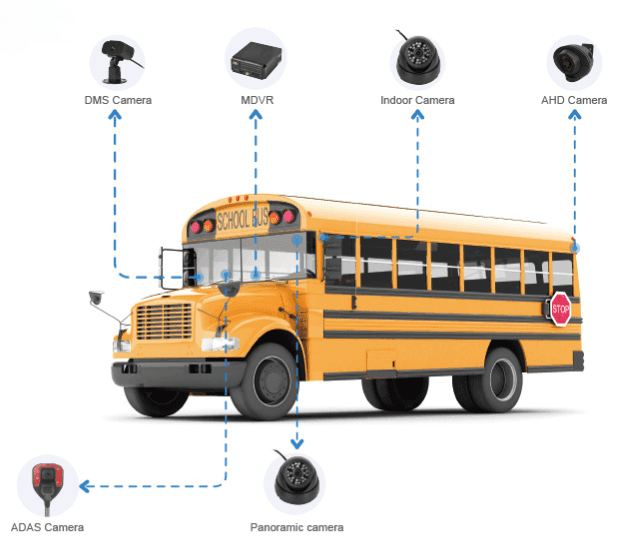
School bus incidents can include more than collisions. Sudden braking, route deviations, missed stops, speeding, passenger disputes, or unexpected road events may all require review. Fleet managers need reliable records to understand what happened and how the vehicle responded.
A fleet management system can support this process by combining location data, driving records, video, and event alerts. These records help operators reconstruct the event more clearly instead of depending only on memory or verbal reports.
Why Location Data Alone Is Not Enough
GPS records can show where a school bus travelled and when it reached a certain point. However, location does not always explain why an incident happened. Fleet managers may also need vehicle speed, stopping duration, route history, driving direction, and event time stamps.
This is where school bus tracker software can support a more detailed review. Historical playback may show whether the vehicle followed its assigned route, stopped at the correct location, or remained in one area longer than expected.
For example, if a parent reports that a bus did not stop at the designated point, the fleet team can review the route record and stopping history. If video is available, they can compare the location data with footage from the same time period.
This combination gives managers a more complete basis for investigation. It also reduces the risk of making a decision from one isolated source of information.
Video Provides Context Around Driving Events
Location and speed records explain part of an incident, but they may not show what was happening around the vehicle. Video can add important context.
For example, harsh braking may appear unusual in a driving report. Video could show that another vehicle entered the lane, a pedestrian crossed unexpectedly, or traffic conditions changed suddenly. This information helps managers understand whether the driver response matched the situation.
AI video telematics can also help operators find relevant footage more efficiently. Instead of reviewing long recordings, event-linked video can direct attention to a specific period around the incident.
Solutions involving GPS tracking for school buses become more useful when location data is connected with video and driving events. Managers can review what happened before, during, and after the reported event and compare several sources of evidence.
Incident Timelines Make Reviews More Structured
A practical review usually starts with an incident timeline. The fleet manager can identify the reported time and then examine several minutes before and after it.
Useful records may include route position, vehicle speed, stopping time, ignition status, video footage, and system alerts. When these records are placed in sequence, the investigation becomes easier to follow.
For instance, repeated hard braking before an incident may point to difficult traffic conditions or a route section that deserves further attention. An unexpected stop may also have a reasonable explanation when the wider timeline is reviewed.
Historical records from school bus tracker software can support this process by showing previous vehicle movements and route activity. These records may also help fleet teams document findings for discussions with drivers, schools, transport contractors, or parents.
Review Findings Can Support Driver Coaching
Incident review should not only focus on responsibility. It can also reveal patterns that may help improve later operations.
If several incidents involve similar braking behavior, speeding, route delays, or difficult road sections, managers can use those findings during driver coaching. Specific examples from actual fleet records are often more useful than general safety reminders.
School bus routes also change throughout the day. Morning congestion, school-zone traffic, roadworks, weather, and passenger activity can affect driving conditions. Reviewing real operating records helps supervisors understand where recurring difficulties appear.
Data from GPS tracking for school buses may also reveal repeated route deviations, long idling periods, or unusual stopping locations. These patterns can guide route adjustments or help managers discuss operating practices with drivers.
Integration Matters for Larger School Bus Fleets
Incident review becomes harder when GPS records, video, alerts, and fleet information are stored in separate systems. Managers may spend unnecessary time matching data manually.
For larger fleets, system integration can simplify this process. BSJ Technology develops AI video telematics, Fleet IoT, GPS tracking, and fleet management equipment for B2B applications. They also support integration with third-party software platforms such as Wialon and GpsGate.
Their School Bus solution uses IoT technology for real-time monitoring, with the aim of supporting safer student transportation and clearer fleet visibility. For operators, the practical value comes from connecting vehicle information with everyday monitoring and review workflows.
An open ecosystem can also matter to distributors and system integrators. Existing fleet platforms may already contain dispatch, route, or vehicle data. Integration allows related telematics information to fit into those established systems instead of creating another isolated workflow.
Clear Records Improve Follow-Up Communication
School bus incidents often involve several parties. Drivers, fleet managers, schools, parents, and transport contractors may all need information about what happened.
Clear incident records make these conversations more structured. Route history, time stamps, video, and driving data can be reviewed together before a response is given.
For example, school bus tracker software can provide historical movement records, while video can explain what happened around a specific stop or road section. This gives managers a factual basis for follow-up discussions.
Archived GPS tracking for school buses records can also be useful when a complaint is reported later rather than immediately. Managers can return to the relevant date and time instead of depending on incomplete recollections.
From Incident Review to Better Fleet Decisions
A useful incident review should explain the sequence of events, the available evidence, and whether further action is needed. GPS data, video, alerts, and driving records each contribute a different part of that picture.
For technology providers such as BSJ Technology, school bus monitoring forms part of a wider AI video telematics and Fleet IoT environment. For fleet operators, the main goal remains practical: review incidents efficiently, understand their causes, and use the findings to improve routes, driver coaching, and communication.
When incident records are organized consistently, individual events can become useful operational information rather than isolated problems. This gives school bus managers a clearer way to learn from incidents and improve future fleet decisions.