A servo motor’s performance specifications tell only part of the story. For design engineers and system integrators, certifications matter just as much—they determine whether a component can be used in equipment destined for specific markets, whether it meets safety requirements, and whether it simplifies or complicates the final machine certification process. But certification language on datasheets is often dense, and the practical implications are not always obvious.
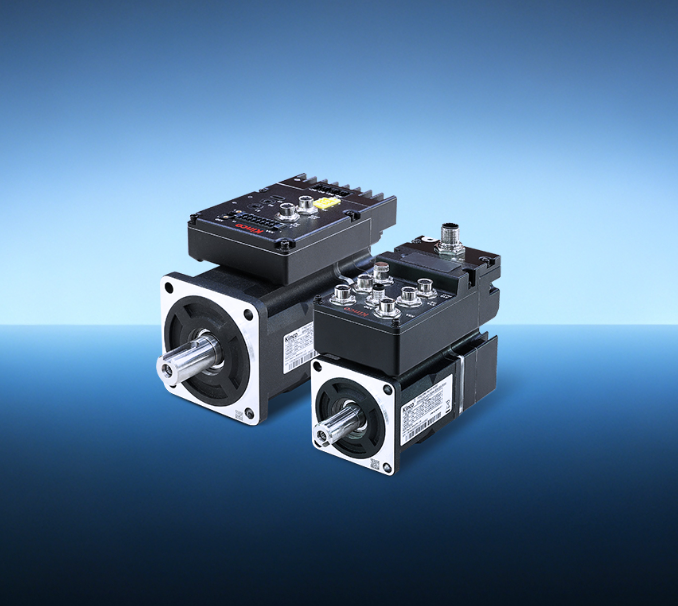
This article explains the key certifications found on modern DC servo motors, using Kinco’s iSMD integrated servo motor as a reference point for how these standards appear on a real product. The goal is to provide clarity on what each certification actually requires and what it means for the engineer specifying the component.
CE Marking: Conformity with European Legislation
CE marking indicates conformity with the applicable EU legislation for a product placed on the European market. It is not a universal requirement for all products, but rather applies to products that fall within the scope of the relevant EU harmonisation legislation.
Depending on the motor and drive architecture, CE marking may involve compliance with requirements related to electrical safety and electromagnetic compatibility. The Low Voltage Directive (2014/35/EU) and the EMC Directive (2014/30/EU) are among the directives that commonly apply, but the specific applicable legislation depends on the product’s characteristics and intended use.
CE marking is a manufacturer’s declaration of EU requirements compliance; for the iSMD integrated servo motor, it appears as a compliance indicator on the product specification. For system integrators, specifying CE‑marked components can streamline machine certification, though the final equipment must still undergo its own conformity assessment.
RoHS 2.0: Material Restrictions
RoHS—the Restriction of Hazardous Substances Directive—limits the use of specific hazardous materials in electrical and electronic equipment. The current version, RoHS 2.0 (Directive 2011/65/EU), restricts ten substances including lead, mercury, cadmium, hexavalent chromium, and certain brominated flame retardants.
For a DC servo motor, RoHS compliance means that the materials used in the motor windings, magnets, connectors, and printed circuit boards do not exceed the permitted concentration limits for restricted substances.
RoHS compliance addresses material restrictions and is one of the compliance requirements that may apply when placing electrical and electronic equipment on the EU market. It does not, by itself, constitute full market access—other directives and regulations may also apply depending on the product.
UL Certification: North American Safety Recognition
UL (Underwriters Laboratories) certification is widely recognized in North America and is commonly specified for electrical equipment used in industrial automation. For servo motors, the relevant standard is UL 1004-6, which specifically covers servo and stepper motors. This standard works in conjunction with UL 1004-1, the general requirements for rotating electrical machines.
For system integrators shipping equipment to the US or Canada, using UL-certified components can simplify the overall equipment certification process. The iSMD integrated servo motor carries UL certification, and Kinco‘s broader robotic product line holds UL and CE markings as part of its global compliance approach.
STO and Functional Safety
Safe Torque Off (STO) is a functional safety feature that prevents the drive from supplying torque-producing energy to the motor. When activated, STO removes the energy that would generate torque, making controlled motion initiation impossible while the function is active.
However, the motor may still coast or move due to external forces such as gravity, mechanical spring energy, or inertia, so additional braking or stopping functions may be required depending on the application and risk assessment.
The governing standard for STO and other functional safety functions in variable speed drives is IEC 61800-5-2. This international standard defines the specific requirements for safety functions in adjustable speed electrical power drive systems.
STO is particularly relevant in applications where operators interact with moving machinery—packaging lines, material handling equipment, and robotic cells are common examples.
The iSMD integrated servo motor incorporates STO Safe Torque Off functionality, which can reduce the need for additional electromechanical switching in some safety architectures. As with any safety function, the final system must be assessed as a whole to determine the appropriate safety measures.
How Certifications Inform System Integration
For engineers specifying DC servo motors, certifications serve practical purposes beyond regulatory compliance. They provide evidence that the component has been tested against recognized standards, which can reduce uncertainty during system design.
A motor with UL marking, for example, has been evaluated for temperature rise and dielectric strength under defined conditions. A motor with CE marking has been assessed for conformity with applicable EU legislation.
Certifications also simplify the documentation trail for the final equipment. Components that already carry relevant marks reduce the testing burden for the final machine, though they do not eliminate the need for system-level certification. The machine as a whole must still comply with applicable regulations and standards, and component certifications are part of the evidence that supports that compliance.
For design engineers, certifications are useful starting points for assessing market eligibility, component compliance, and integration requirements. They do not replace system-level certification, but they can reduce uncertainty when selecting components for equipment intended for different markets.
Understanding what each certification actually requires—and what it does not guarantee—helps engineers make informed decisions and avoid common compliance pitfalls.